
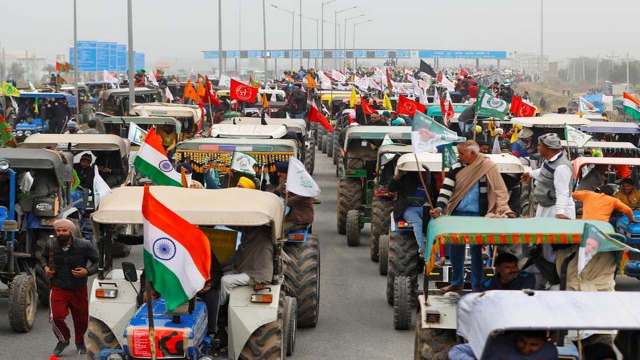
In an unprecedented move, Prime Minister Narendra Modi on Friday announced the repeal of the three central farm laws that have remained at the centre of controversy for the past year. While a section of the farmers is very happy with the government’s move, a lot of the smaller farmers across the country remain the biggest losers.
Union Agriculture Minister Narendra Singh Tomar while speaking to the media said that the intention behind bringing these laws was to bring revolutionary changes in the lives of farmers but the government failed to explain the benefits of the central farm laws to some farmers of the nation.
The three farm laws included the Farmers (Empowerment and Protection) Agreement of Price Assurance and Farm Services Act, 2020, the Farmers Produce Trade and Commerce (Promotion and Facilitation) Act, 2020, and the Essential Commodities (Amendment) Act, 2020.
Besides repealing the farm laws, PM Modi also announced setting up a committee to make the Minimum Support Price (MSP) system more effective and transparent as well as suggest ways to promote zero budgeting based-agriculture.
How farm laws could have benefitted farmers?
These laws were aimed at shifting the terms in favour of farmers by getting rid of unscrupulous middlemen.
The Farmers’ Produce Trade and Commerce (Promotion and Facilitation) Act, 2020 sought to facilitate barrier-free trade of farm produce outside the markets.
The markets where the farm produce was sold were notified under the various state Agriculture Produce Market Committees (APMC) laws.
The Farmers (Empowerment and Protection) Agreement on Price Assurance and Farm Services Act, 2020 define a framework for contract farming.
The Essential Commodities (Amendment) Act, 2020 removes stock limits on agricultural produce to enable merchants to directly purchase produce from farmers.
The merchants could purchase these farm produce in large quantities from farmers in times of bumper harvests.
How new model was different from the existing APMC system?
APMC regulations require farmers to only sell to licensed middlemen in notified markets, usually in the same area where farmers reside.
This limited farmers’ ability to sell their harvest outside their local APMCs. The new laws allowed them to sell their produce in an open market.
APMC markets were initially set up in the 1960s. The aim was to prevent distress sale by farmers and enable better price discovery for their produce.
APMC-driven markets however become barriers for farmers to get a fair price for their produce as they were forced to sell it through these committees.
The intermediaries and middlemen have been telling the farmers at what price they should sell their farm produce.
Why farmers protested
Farmers fear that the new laws would usher big corporate groups into agriculture produce markets.
This could create monopolies, allowing them to fix prices at low levels, hurting farmers.
Under the new farm law that were implemented last year, traders are not required to pay any fees.
Farmers feared that freeing up markets without any fee or oversight by state governments would break down the traditional markets.