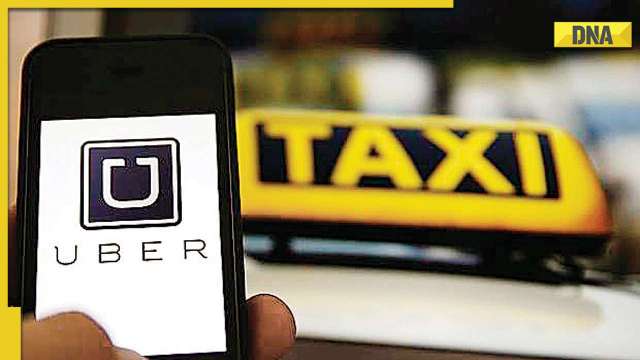
A sensational leaked trove of internal Uber documents has revealed the dark side of the ride-hailing platform, that allegedly broke laws and secretly lobbied governments as it planned to expand globally.
A joint media investigation, dubbed the ‘Uber Files’, found that Uber used “stealth technology” to fend off government investigations.
According to The Guardian which accessed `Uber Files` with over 1,24,000 documents from 2013 and 2017, the data “shows how Uber tried to shore up support by discreetly courting prime ministers, presidents, billionaires, oligarchs and media barons”.
What are the Uber Files?
The Uber Files are a leak of 182 GB of data that were obtained by The Guardian newspaper from an anonymous source.
The Uber leak includes “emails, iMessages and WhatsApp exchanges between the Silicon Valley giant`s most senior executives”.
The leaked data is from a period when Uber was run by its controversial co-founder Travis Kalanick, and includes more than 83,000 emails, iMessages and WhatsApp messages, “including often frank and unvarnished communications between Kalanick and his top team of executives”.
Leaked data suggests that Uber executives were at the same time under no illusions about the company`s law-breaking, with one executive joking they had become “pirates” and another conceding: “We`re just fucking illegal,” the report mentioned late on Sunday.
READ | Anti-speeding tech now mandatory in new cars in European Union
Uber’s reaction to the report
In a statement, Uber said that there has been no shortage of reporting on Uber`s mistakes prior to 2017.
“Five years ago, those mistakes culminated in one of the most infamous reckonings in the history of corporate America. That reckoning led to an enormous amount of public scrutiny, a number of high-profile lawsuits, multiple government investigations, and the termination of several senior executives,” the company said.
CEO Dara Khosrowshahi apparently rewrote the company`s values, revamped the leadership team, made safety a top company priority, implemented best-in-class corporate governance, hired an independent board chair, and installed the rigorous controls and compliance necessary to operate as a public company.
“When we say Uber is a different company today, we mean it literally: 90 per cent of current Uber employees joined after Dara became CEO,” the company added.
Uber said that “We have not and will not make excuses for past behaviour that is clearly not in line with our present values”.
“Instead, we ask the public to judge us by what we`ve done over the last five years and what we will do in the years to come,” it added.
The Guardian led a global investigation into the leaked Uber files, sharing the data with media organisations around the world via the International Consortium of Investigative Journalists (ICIJ).
“More than 180 journalists at 40 media outlets, including Le Monde, Washington Post and the BBC will in the coming days publish a series of investigative reports about the tech giant,” said the report.
(With inputs from IANS)