
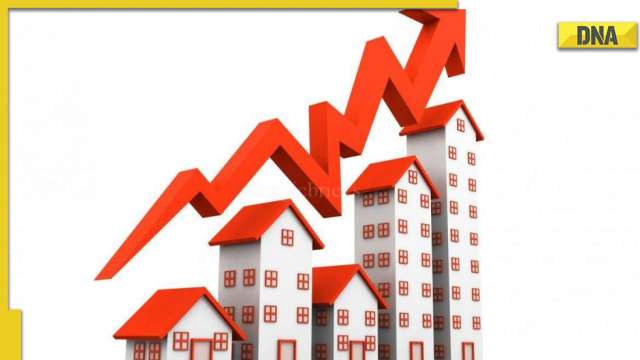
The residential real estate sector in India is slowly recovering from one of its worst downturns. The last quarter’s (April to June 2022) new supply and sales statistics are positive and signal that developers are entering the market again, with the supply of new homes reaching a seven-year high. The demand momentum has also kept up its pace, pointing to favourable market perception of real estate investment.
We use the Housing Price Index (HPI), which was collaboratively produced by the Indian School of Business (ISB) and Housing.com, to determine the recent market trend. We monitor real estate costs and the number of homes sold in eight important Indian cities.
We see a slight increase in average prices between April and June 2022 of 0.4% according to the Indian aggregate price index. During the same period last year, this number was approximately 0.3%. The past three months have continued the trend of the little price increase seen during the previous few quarters. In June 2022, prices rose 2.8% year over year. The little price increase is the result of growing costs brought on by inflationary pressures as well as the premium associated with properties that are ready to move into and are in great demand as a result of the epidemic.
Property sales have been on the rise, on average, during the last six months, according to the Quantity Index for the top eight cities. For the entirety of Q2 of this year, the index was higher than the base of 100 for 2017. Since the epidemic began, this has only happened once. Despite fluctuating in small ranges, the quantity index’s successive development is a good indicator for the market. We should stress that the end user is the main force behind the current market. As a result, despite the index’s moderate rate of expansion, the market’s W-shaped recovery is being driven by continuous demand momentum. The quantity levels are significantly higher than in March 2020, although they have not yet reached February 2020 levels. The number of units sold nationwide at the end of June 2022 is around 8–9% less than it was before the epidemic (February 2020).
In addition to overall statistics, HPI also offers perceptions of specific city-level patterns. The price patterns within each city are comparable to those across India. Except for Mumbai, where prices fell by 0.33% during the quarter, all cities had price changes of between 0-2% in terms of quantity. The quantity index at the city level, however, provides useful information. The figures for Mumbai are far higher than they were before the epidemic, and the city has reported an increase of almost 22% between January and June 2022. The significant increase in sales in Mumbai is primarily responsible for the robust sales rebound.
But during the past six months, development in other cities has also been moderate.
This optimistic outlook and upward trends, however, call for a cautious reading after the second wave of Covid-19, which was followed by a W-shaped recovery. Global inflationary pressures, reversal of the central bank’s accommodative monetary policy stance, spillover of geopolitical concerns, and other financial market volatility are all posing ongoing challenges to upward trends and slowing growth momentum.
The second part of the year will likely see further rate increases, as we move forward. This would be in addition to the Reserve Bank of India’s recent round of rate increases as it works to contain inflation. On the other hand, this significant inflation has had a detrimental influence on the supply side’s input-building prices as well as the demand side’s real consumer income. Both have the potential to temporarily weaken the real estate market. The behaviour of homebuyers who are currently on the fence, however, will be key in deciding the market’s momentum given the increasing importance of home ownership and the fact that mortgage rates are still below their pre-Covid levels.